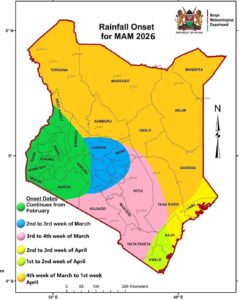
Nairobi, February 23, 2026 — Kenya is heading into the crucial March–April–May (MAM) long rains season with starkly contrasting weather patterns expected across the country, even as a deepening drought tightens its grip on northern counties.
In its latest seasonal forecast, the Kenya Meteorological Department (KMD) says western Kenya, including the Lake Victoria Basin and the Highlands West of the Rift Valley, is likely to receive near to above-average rainfall. Parts of the central highlands, including Nairobi and surrounding counties east of the Rift Valley, are also projected to record similar rainfall levels.
However, northeastern counties and much of the Coast are expected to experience near-average to below-average rainfall, with coastal areas likely to record below-normal totals.
Flood Risks in the West
The MAM season is Kenya’s primary rainfall period and plays a critical role in agriculture, water replenishment, and hydropower production. According to KMD, the peak of the rains is expected in April across most parts of the country, except at the Coast where it is projected to peak in May.
Forecasters caution that rainfall distribution may be uneven, with intermittent dry spells likely during the season. At the same time, isolated heavy downpours could occur in several regions, raising the risk of flash floods, particularly in the Lake Victoria Basin and parts of the Rift Valley.
Warmer-than-average temperatures are also expected nationwide, increasing the likelihood of heat stress and faster evaporation rates, especially in already dry areas.
Northern Kenya’s Crisis Deepens
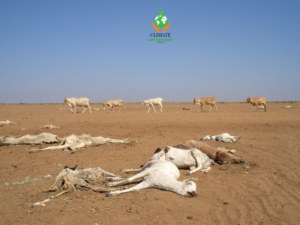
The forecast comes against the backdrop of a worsening drought in Kenya’s Arid and Semi-Arid Lands (ASAL). The failure of the October–December 2025 short rains left large parts of northern Kenya dry, with rainfall reported as near to below normal and poorly distributed.
Humanitarian agencies estimate that the number of people facing acute food insecurity in ASAL counties has risen sharply — from 2.1 million in January to 3.3 million by mid-February 2026.
Pastoralist communities in counties such as Turkana and Samburu have been hit particularly hard. Livestock deaths are mounting as grazing fields dry up and water sources shrink. In some areas, daytime temperatures have exceeded 35°C, intensifying heat stress and accelerating the loss of pasture.
Relief operations are also under strain. Aid agencies report that funding shortfalls have forced them to scale back food assistance at a time when needs are rising.
A Country of Climate Extremes
The seasonal outlook highlights Kenya’s increasing climate variability, where floods and drought coexist within the same borders. While western counties may need to prepare for flood mitigation and drainage management, northern communities remain focused on survival amid prolonged dry conditions.
Experts say early preparedness will be critical. Farmers in wetter regions are being advised to take advantage of the forecast rains, while pastoral communities in drought-affected areas are urged to implement water conservation measures and livestock management strategies.
As the long rains approach, Kenya faces a dual challenge: managing excess water in some regions while urgently responding to water scarcity and hunger in others — a reminder of the country’s growing vulnerability to climate shocks.
FOLLOW US MORE: