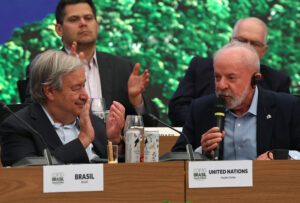
The United Nations Climate Change Conference, COP30, will open on Monday, Nov. 10, in Belém, Brazil, with delegates from over 150 countries expected to gather for two weeks of negotiations that could reshape global climate finance.
The conference aims to chart a roadmap for mobilizing $1.3 trillion annually in climate finance for developing nations, a target that will dominate discussions as the world grapples with the rising costs of adaptation, mitigation, and recovery from climate-related losses.
COP30 marks a critical moment in the international climate agenda. It follows the adoption of the first Global Stocktake at COP28 in Dubai, which confirmed that current national commitments fall far short of the 1.5°C target outlined in the Paris Agreement. With this new summit taking place in the heart of the Amazon, expectations are high for concrete financial mechanisms and accountability frameworks that move beyond pledges toward real delivery.
Although, some key world leaders, including those from China, the United States, India, and Russia, are expected to skip the opening sessions, raising fresh questions about global leadership and commitment to the climate agenda.
A Defining Test for Global Climate Finance
At the center of the conference is Brazil’s proposal to overhaul global climate finance architecture. The plan seeks to expand access to capital for developing economies through new financial tools, reforms to multilateral lending institutions, and incentives for private-sector investment.
Among the initiatives being discussed are Sustainable Sovereign Bonds, the Eco Invest Brazil Program, and the Tropical Forests Forever Global Fund — a proposed $125-billion blended financing mechanism aimed at protecting nearly one billion hectares of tropical forests across 70 countries.
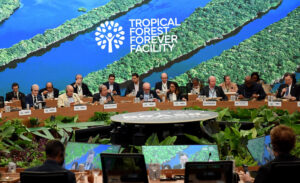
Brazil’s approach highlights an urgent need for innovation in climate finance, especially as existing commitments remain unfulfilled. The $100 billion annual goal first set in 2009 by developed nations is yet to be fully delivered, even as the costs of adaptation and loss and damage continue to rise.
The new $1.3 trillion target seeks to bridge this gap but questions remain over where the money will come from, how much will be in the form of grants versus loans, and how equitable its distribution will be.
Africa’s Stake: Between Vulnerability and Opportunity
For Africa, which contributes less than 4% of global greenhouse gas emissions yet faces some of the world’s most severe climate impacts, the stakes could not be higher. Floods, droughts, and desertification are intensifying across the continent, displacing millions and straining fragile economies.
According to the African Development Bank (AfDB), the continent requires over $277 billion annually by 2030 to meet its climate adaptation and mitigation needs. Yet, Africa currently receives less than 12% of global climate finance flows — most of which come as loans, further deepening debt burdens.
As COP30 convenes, African negotiators are expected to push for a clear definition of climate finance, predictable funding channels, and a stronger focus on grant-based support rather than concessional loans.
The African Group of Negotiators (AGN) has also emphasized the need for transparent mechanisms that ensure fair access for Least Developed Countries (LDCs) and Small Island Developing States (SIDS). These nations argue that the finance conversation must move beyond numbers to address structural inequities that prevent African countries from accessing funds quickly and efficiently.
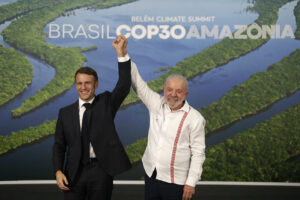
Another major theme expected to shape the first week of COP30 is governance and accountability in climate finance. Many developing nations are calling for the establishment of a new international coordination platform — sometimes referred to as a “Circle of Finance Ministers” — to oversee the implementation of the $1.3 trillion roadmap and align financial flows with the Paris Agreement goals.
This idea, supported by Brazil and several African countries, would bring finance ministers, central banks, and development institutions together to ensure that climate funds are mobilized and distributed transparently.
The debate extends to the role of multilateral development banks (MDBs), such as the World Bank and the IMF, which have been criticized for slow disbursement rates and risk-averse lending policies. Reforming these institutions to prioritize climate action and unlock private capital at scale will be a central topic throughout the conference.
Africa’s Message to COP30
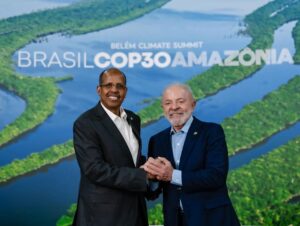
African leaders are expected to deliver a united message in Belém: the global financial system must recognize the continent’s dual role as both a victim and a solution provider in the climate crisis.
With vast renewable energy potential, critical minerals for clean technologies, and the world’s largest carbon sinks — including the Congo Basin – Africa holds the key to a sustainable global transition. However, without sufficient financing and technology transfer, these opportunities risk being lost.
Several African states are expected to spotlight just transition strategies, emphasizing the need to balance environmental goals with social and economic realities. The African Union’s Climate Change and Resilient Development Strategy (2022–2032) will likely serve as a guiding framework for continental engagement at COP30.
The Road Ahead

As preparations continue in Belém, local authorities have transformed the city into a temporary global capital for climate diplomacy. Security operations have been reinforced, and infrastructure upgrades completed to host thousands of delegates, scientists, civil society actors, and journalists.
The opening plenary on Monday will set the tone for what many observers see as the most consequential climate summit since Paris in 2015. With less than five years remaining to meet key 2030 targets, COP30 is widely viewed as a last opportunity to align political will with financial ambition.
“For Africa, success at COP30 will not only be measured by the size of financial commitments but by the fairness of their implementation” as CGMR climate finance expert put it in the corridors of pre-summit meetings.
FOLLOW FOR MORE: