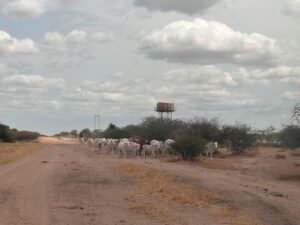
Climate migration has become one of the defining challenges of the 21st century, reshaping societies across Africa and influencing trajectories of social mobility. Unlike voluntary migration that often seeks opportunity, climate-induced displacement is frequently involuntary, driven by droughts, floods, cyclones, sea-level rise, and desertification. The consequences extend beyond the immediate physical movement of people, touching on livelihoods, education, health, gender equality, and social inclusion. For many communities, climate migration is not only about surviving shocks but also about navigating the fragile prospects of intergenerational progress.
Climate migration is the movement of people influenced or compelled by climate factors — has become a defining feature of African societies. Yet migration is not only about displacement and loss; in some contexts, it functions as an adaptive strategy and a potential pathway for households to diversify livelihoods. The challenge lies in whether climate mobility enables or obstructs social mobility the ability of individuals and families to move upward in economic, educational, and social terms across generations.
This article examines the drivers of climate migration in Africa, the ways mobility intersects with social mobility, regional policies and instruments, major events and case studies, and concludes with practical solutions for policymakers and practitioners.
Conceptualizing Climate Migration
Climate migration refers to the voluntary or forced movement of individuals or groups due to sudden-onset climate events (cyclones, floods, wildfires) or slow-onset processes (drought, desertification, sea-level rise, glacial melt). In Africa, mobility has historically been an adaptation strategy; pastoralists, farmers, and fishing communities have long adjusted to environmental variability by moving seasonally. What distinguishes today’s context is the speed, intensity, and unpredictability of climate change combined with population growth and socio-economic stress that transforms mobility into displacement crises or survival strategies rather than planned adaptation.
Forms of climate migration in Africa include:
- Internal displacement: Within borders, often rural-urban or rural-rural.
- Cross-border movement: Common in borderlands with shared ethnic and livelihood systems.
- Seasonal/circular migration: Long-standing practice, now disrupted or expanded by climate stress.
- Permanent relocation: Increasingly likely in low-lying coastal zones and areas facing severe desertification.
Climate Migration and Social Mobility: The Intersections
Social mobility depends on access to stable livelihoods, education, health, security, and social inclusion. Climate migration affects these foundations in several ways:
Livelihood Shocks
For farmers, the collapse of harvests due to recurrent droughts or catastrophic floods often forces entire households to abandon traditional livelihoods. Many of these displaced farmers find themselves absorbed into informal urban economies where opportunities are limited, wages are low, and social protections are absent. Pastoralists face an equally devastating trajectory. When herders lose livestock to prolonged droughts or disease outbreaks, they often fall into poverty traps with minimal capacity for recovery. Generations of accumulated wealth vanish in a matter of months, leaving households unable to rebuild. Coastal fishers experience similar shocks as declining fish stocks and rising seas erode the very foundation of their livelihoods. Unlike other professions, fishing skills are not easily transferable to inland economies, leaving many displaced fishers struggling to survive.
Education Disruptions
Migration triggered by climate shocks often interrupts the schooling of children, many of whom drop out permanently. Displaced families in host communities face significant challenges in covering enrollment costs or accessing already overburdened schools. The impact is particularly severe for girls, who are frequently pulled out of school due to increased domestic burdens or married off early as families resort to coping strategies in times of crisis. The interruption of education not only curtails immediate opportunities but also undermines the long-term potential for social mobility and intergenerational advancement.
Health and Human Capital
The health dimension of climate migration is profound yet often overlooked. Displacement is frequently accompanied by malnutrition, outbreaks of waterborne diseases, and mental health stress caused by the trauma of losing homes, livelihoods, and loved ones. Access to healthcare services declines for displaced populations, further eroding their long-term productivity and resilience. Without interventions to provide nutrition, basic health, and psychosocial support, climate migrants risk losing essential human capital that is critical for rebuilding their lives and contributing to host communities.
Gender Inequality
Women face unique vulnerabilities in the context of climate-induced displacement. They often bear disproportionate caregiving responsibilities during migration, which limits their ability to seek income-generating opportunities. In displacement camps and informal urban settlements, women and girls are at heightened risk of gender-based violence, including sexual exploitation. Furthermore, structural barriers such as limited access to financial services and land rights restrict women’s ability to adapt and recover. Without deliberate gender-sensitive interventions, climate migration deepens existing inequalities, trapping women in cycles of dependency and vulnerability.
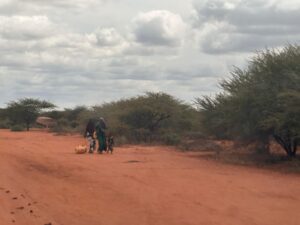
Inequality and Exclusion
Climate migration is not experienced uniformly across society. Wealthier households often have the resources to migrate proactively, diversify income sources, and access remittances from relatives abroad. By contrast, poorer households are frequently trapped in high-risk zones, unable to move, or are forced to migrate under dangerous conditions that perpetuate poverty across generations. This disparity highlights how climate change magnifies existing inequalities, further entrenching social exclusion for the most vulnerable.
Host Community Pressures
Migration also generates significant pressures on host communities, especially in cities and peri-urban areas where infrastructure is already strained. Influxes of displaced populations intensify competition for housing, sanitation, water, and jobs. Without adequate planning and investment, these pressures deepen urban poverty and inequality, creating tensions between migrants and host populations. Instead of being absorbed productively, climate migrants often become marginalized, reinforcing cycles of exclusion and vulnerability.
Regional Policy and Institutional Responses
Africa has been proactive in recognizing the links between climate change and migration, but significant gaps remain in implementation. The African Union’s Kampala Convention of 2009 was the first legally binding instrument in the world to protect internally displaced persons, explicitly recognizing displacement caused by natural disasters and climate change. It obligates states to prevent displacement, protect affected populations, and provide durable solutions. Meanwhile, the AU’s Agenda 2063 envisions a climate-resilient Africa where environmental sustainability is linked to inclusive development.
The Intergovernmental Authority on Development (IGAD) has taken notable steps in the Horn of Africa, where mobility is central to pastoralist livelihoods. Its 2023–2030 Climate Adaptation Strategy explicitly integrates human mobility as a pillar of resilience, emphasizing cross-border cooperation to manage drought, support pastoralist movement, and strengthen migration governance. In West Africa, the Economic Community of West African States (ECOWAS) has adopted a Regional Climate Strategy and Action Plan (2022–2030) that connects adaptation and migration policies with its Free Movement Protocol, aiming to harmonize safe mobility pathways. The Southern African Development Community (SADC), though less advanced in legal frameworks, has incorporated environmental migration into its disaster risk reduction and climate resilience strategies.
International organizations also play a crucial role. The International Organization for Migration (IOM) has developed its 2021–2030 Strategy on Migration, Environment, and Climate Change, which guides support to African governments through research, technical assistance, and programs. Partners like the Internal Displacement Monitoring Centre (IDMC) and the World Meteorological Organization (WMO) provide evidence and early warning systems to inform better planning. Despite these advances, persistent challenges include incomplete ratification of instruments, financing gaps, operational weaknesses, and difficulties in harmonizing cross-border policies.
Case Studies and Events
The Horn of Africa has been repeatedly battered by multi-year droughts in 2011, 2016, and again between 2020 and 2022. These droughts displaced millions in Somalia, Ethiopia, and Kenya, wiping out livestock herds and collapsing pastoralist economies. Many of the displaced migrated into urban centers or crossed borders, overwhelming humanitarian assistance systems.
In 2023, Cyclone Freddy struck Malawi, Mozambique, and Madagascar, becoming one of the longest-lasting tropical cyclones on record. It displaced hundreds of thousands, destroyed infrastructure, and wiped out farmland, leaving communities trapped in cycles of poverty with limited recovery capacity.
Across the Sahel, desertification has eroded grazing land and heightened tensions between farmers and herders. Shrinking mobility corridors once used by pastoralists have led to conflict, displacement, and increased cross-border pressures in Mali, Niger, Burkina Faso, and Nigeria. Meanwhile, along the coasts of West Africa, sea-level rise and erosion have displaced entire fishing villages in Senegal, Nigeria, and Ghana, undermining marine-based livelihoods and forcing inland resettlement.
Policy Gaps and Barriers
Despite these regional and international frameworks, significant barriers persist. Many African countries have yet to fully ratify and implement the Kampala Convention, and where ratified, national legal frameworks remain weak. Financing remains a chronic obstacle, as climate adaptation and displacement responses are consistently underfunded, with little prioritization of migration-sensitive interventions. Data gaps also hinder effective policymaking, as most statistics fail to capture gender- and age-disaggregated realities, particularly for slow-onset displacements. Weak cross-border coordination, often rooted in sovereignty concerns, leaves climate migrants vulnerable at borders. Finally, urban centers continue to lack the infrastructure and resources necessary to absorb displaced populations, which exacerbates poverty and inequality in host communities.
Pathways Forward: Solutions
Addressing climate migration in Africa requires a multidimensional approach that combines legal, social, and economic solutions. First, the full ratification and implementation of the Kampala Convention across African Union member states is critical, alongside the integration of climate migration into National Adaptation Plans and disaster risk frameworks. Anticipatory action is equally essential. Early-warning systems should be expanded and linked with anticipatory financing mechanisms such as cash transfers and livelihood protection measures to reduce displacement impacts before crises escalate.
Investments in adaptive livelihoods can transform vulnerability into resilience. Climate-smart agriculture, improved rangeland management, fisheries adaptation, and rural infrastructure must be scaled up, while vocational training and small enterprise support can diversify income sources for displaced populations. Safe and regular mobility pathways should also be strengthened through regional free-movement agreements that explicitly include climate-affected populations. Humanitarian visas or temporary protection schemes could provide lifesaving relief during climate emergencies.
Human capital development must remain central. Continuity of education for displaced children can be ensured through mobile schools, flexible enrollment, and digital learning platforms. Health services, including nutrition and mental health programs, must be expanded in displacement settings to preserve long-term productivity. Gender and youth inclusion is equally critical, requiring targeted support for women entrepreneurs, protection against gender-based violence, and programs that empower young people with climate-resilient skills and opportunities.
Finally, addressing climate migration requires financing and governance reforms. International climate finance must prioritize displacement-sensitive adaptation, while coordination across ministries of environment, migration, labor, and social protection needs strengthening. Robust data systems are essential for tracking mobility trends, understanding vulnerabilities, and evaluating outcomes.
Conclusion
Climate migration in Africa is not merely a humanitarian issue; it is a structural challenge that will shape the continent’s development trajectory for decades to come. Without adequate policies and investments, climate displacement threatens to undermine social mobility, perpetuate inequality, and destabilize entire regions. Yet, with proactive strategies—anchored in inclusive governance, adaptive livelihoods, gender equity, and regional cooperation—climate migration can be transformed from a story of vulnerability into one of resilience and opportunity. Africa stands at a crossroads, and the choices made today will determine whether climate migration becomes a crisis to be managed or a pathway to more sustainable and inclusive futures.
Follow us for more: